PB Comms wins Agency of the year at the 2026 MAX awards
Now Available:
PB Comms wins Agency of the year at the 2026 MAX awards
At this year's MAX Awards, PB Comms won Agency of the year, a category voted by the Financial Standard editorial team. The award recognises agencies specialising in media, public relations or creative services that have driven strong growth and measurable results for their financial services clients. A big congratulations to the whole PB Comms team for always going above and beyond.
Emerging markets (EM) offer a compelling blend of income and growth for investors, with an increasing number of EM companies now paying dividends comparable to those paid in developed markets (DM), according to Matt Williams, senior investment director at Aberdeen Investments.
Mr Williams expects the strong growth characteristics of EM dividends to continue in the years ahead. Many EM companies now recognise the importance of dividends in attracting investors. As reported in the Bloomberg March 2025 report, since 2001, the number of dividend-paying companies in EM has grown significantly and is now on par with DM.
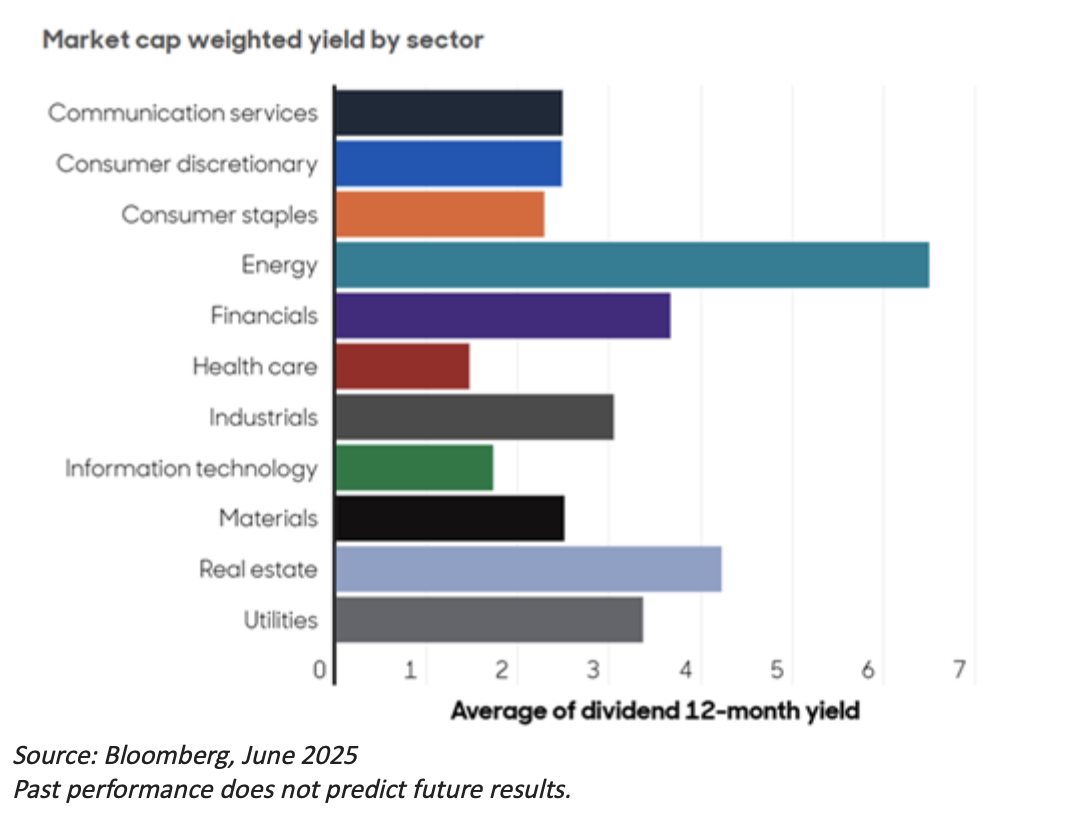
“Surprisingly, the proportion of EM companies paying dividends, as reported in the Bloomberg March 2025 report, is now similar to that in developed markets (DM) – around 85 per cent. Perhaps more significantly, Jefferies, 2023 actual, reported nearly 40 per cent of companies in EMs pay a dividend above 3 per cent, with yields of over 6 per cent per annum in the energy sector, and over 4 per cent within real estate. Investors can access attractive income opportunities through EM equities,” said Mr Williams, referring to the chart below from Bloomberg, June 2025.
Strong corporate fundamentals and good underlying economic growth mean dividends have also grown significantly faster in EMs versus DMs since the early 2000s, according to Mr Williams. The unprecedented pace of this growth is reflected in a compound annual growth rate (CAGR) of around 12 per cent over the last 20 years, as reported in the Bloomberg, March 2025 report. The attractive growth characteristics of EM dividends, stemming from both expanding cash flows and rising payouts, are a trend we expect to continue.
Mr Williams believes “the income component of equity investing is critical, as income represents the lifeblood of total returns over time. It not only comes in the form of dividend distributions, but also through the cash flows that companies generate and reinvest to grow tomorrow’s income.”
“The importance of dividends to long term performance can’t be understated. Jefferies, 2023 actual, reported that since December 2000 dividend returns in EM have been among the highest relative to other regions, with half of investor returns coming directly from the compounding effect of dividend payments. In addition, the price return component, which represents the other half of investor returns, is primarily driven by cash flow growth, which in turn fuels dividend growth.” Mr Williams said.
Looking ahead, he believes EMs are set to benefit from a new global investment cycle, linked to key trends such as digitalisation, decarbonisation and defence.
“Historically, EM performance has been tied to the global investment cycle, and we believe we are embarking on a new one. We expect good growth in several sectors, including technology. Technology hardware companies, such as semiconductor producers, for example, represent the new building blocks of the digital economy and the boom in artificial intelligence (AI).
"We are also witnessing substantial demand for data centres that will power our digital economies. This demand has triggered the need for infrastructure investment in antiquated electricity networks. And elsewhere, the shipping industry is also going through a replacement cycle, based on a need for more eco-friendly technologies and greater defence spending.
Emerging markets are in prime position to benefit from these developments as technology owners and low-cost green metal resource providers.
“We believe EMs are evolving into a compelling destination for income-focused investors, offering a rare combination of sustainable high dividend yields and robust profitable growth potential. By leveraging the high and growing income in EMs, we believe that active investors may access attractive opportunities as part of a diversified portfolio capable of generating strong total returns,” said Mr Williams.